How do I find out who owns a vehicle in North Carolina?
Have you ever been cut off in traffic, witnessed a hit-and-run, or noticed a suspicious vehicle parked in your neighborhood in North Carolina, and wondered, “How do I find out who owns that car?” Or perhaps you are in the market for a used car, found a great deal in Charlotte or Raleigh, and want to verify the seller’s credibility before handing over your hard-earned cash. Whatever your reason, the instinct to run the license plate and get a name and address is completely natural. It happens in the movies and on television all the time — a quick tap on a keyboard and boom, the owner’s full dossier appears on the screen.
However, the reality in North Carolina (and the rest of the United States) is vastly different. Because of strict federal and state privacy laws, finding the registered owner of a vehicle using just a license plate is not something the general public can legally do on a whim. In this comprehensive guide, we will break down exactly what you can and cannot find out from a license plate, the laws governing this information, and the proper legal avenues you can take if you legitimately need to identify a vehicle’s owner.
The Strict Reality of Privacy Laws (DPPA)
The single biggest roadblock to finding out who owns a vehicle in North Carolina is the Driver’s Privacy Protection Act (DPPA). Enacted by the federal government in 1994, this law was specifically designed to protect your personal information. Before the DPPA, many state Departments of Motor Vehicles (DMVs) allowed anyone to walk in, pay a small fee, and request the name and home address associated with a license plate. Unfortunately, this led to severe privacy and safety issues, including instances of stalking and harassment.
Because of the DPPA, the North Carolina Division of Motor Vehicles (NCDMV) is strictly prohibited from releasing personally identifiable information (PII) to the general public. PII includes the vehicle owner’s:
- First and last name
- Home or mailing address
- Phone number
- Driver’s license number
- Social Security Number
- Medical or disability information
If you use an online tool that promises to give you the exact address of a vehicle owner for a few bucks, you should be extremely skeptical. These sites are either providing outdated, inaccurate information gathered from third-party data brokers, or they are operating illegally. Accessing NCDMV databases under false pretenses is a crime, and the penalties for violating the DPPA can be incredibly severe, including hefty fines and potential jail time.
Permissible Uses: Who CAN Access This Information?
While the general public is blocked from seeing personal owner information, the DPPA does carve out several specific exceptions known as “permissible uses.” These exceptions allow certain entities and individuals to access DMV records for legitimate, authorized purposes. You or an agency might be granted access to the registered owner’s identity in North Carolina if the situation falls under one of the following categories:
- Law Enforcement and Government Agencies: Police officers, sheriffs, highway patrol, and other government entities can run plates to carry out their official duties, such as issuing citations, investigating crimes, or tracking down stolen vehicles.
- Insurance Companies: Auto insurers need access to DMV records to investigate claims, manage anti-fraud efforts, and accurately rate policies. If you are in an accident and get the other driver’s plate, your insurance company can use it to find the owner’s insurance details.
- Towing and Impound Companies: If a vehicle is illegally parked, abandoned, or towed, the towing company has the right to look up the owner so they can send legally required notifications regarding the impounded car.
- Private Investigators: Licensed PIs often have specialized access to databases that pull from DMV records, provided they are conducting an investigation that aligns with DPPA guidelines.
- Legal Proceedings: If you are involved in a civil or criminal lawsuit, arbitration, or other legal proceeding, your attorney can subpoena the NCDMV for the vehicle owner’s records.
If you are a private citizen without one of these permissible reasons, you will not be able to unmask the owner of the vehicle.
What Information CAN You Get From a License Plate?
Just because you cannot get the owner’s name and address does not mean a license plate is useless. In fact, a plate number holds a wealth of public information about the vehicle itself. This is incredibly valuable if you are buying a used car or trying to verify the details of a vehicle involved in an incident.
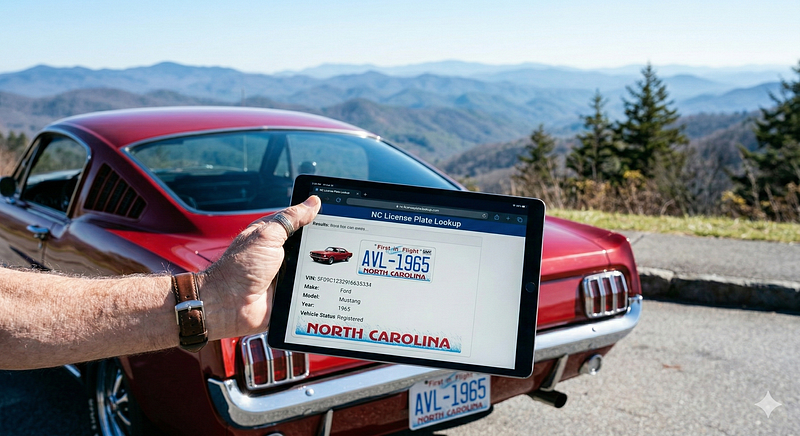
When you run a standard background check on a vehicle, you can typically uncover:
- The Vehicle Identification Number (VIN): The plate usually resolves to the 17-character VIN.
- Vehicle Specifications: You will see the make, model, year, trim level, engine type, and where the car was manufactured.
- Title History: This is crucial. A report can tell you if the vehicle has a clean title, or if it has been branded as salvage, rebuilt, flooded, or junked.
- Accident and Damage Reports: You can see if the vehicle has been in reported collisions, deployed its airbags, or suffered structural damage.
- Lien Status: The report might show if a bank or financial institution currently holds a lien on the vehicle.
- Odometer Readings: Historical mileage data can help you spot odometer rollback fraud.
How to Perform a North Carolina License Plate Lookup
If you want to gather this valuable vehicle history, doing so is quick and completely legal. Because North Carolina is a “one-plate state” (meaning standard passenger vehicles only require a rear license plate), you just need to note down the alphanumeric characters on the back of the car. Here is the best way to get the information you need:
Step 1: Write Down the Exact Plate Number Make sure you have the exact sequence of letters and numbers. North Carolina has many specialty plates (like “First in Flight” or “First in Freedom”), but the core alphanumeric sequence is what matters.
Step 2: Use a Dedicated Online Search Tool Instead of wandering through generic search engines, you should use a specialized tool that cross-references state records, the National Motor Vehicle Title Information System (NMVTIS), and other automotive databases. For the most accurate and streamlined experience, you can run a North Carolina License Plate Lookup at https://northcarolinalicenseplate.com/. Simply enter the tag number, and the system will decode the vehicle’s history without violating anyone’s privacy rights.
+1
Step 3: Review the Vehicle Report Once the search is complete, review the history report to check for red flags like salvage titles or severe accidents. This step is an absolute must-do before purchasing any used vehicle from a private seller on Facebook Marketplace or Craigslist.
What to Do in Specific Situations
Because you cannot simply look up the owner’s name yourself, how should you handle common situations where you need that information?
- Witnessing a hit-and-run or erratic driving: Do not play detective, and definitely do not confront the driver. Write down the license plate number, the make and model of the car, and any distinguishing features. Call the local North Carolina police department or the State Highway Patrol and provide them with the information. They have the legal authority to run the plate, find the owner, and take appropriate action.
- Minor fender benders: Always exchange information at the scene. Take photos of the other driver’s license plate, driver’s license, and insurance card. If they refuse to provide their name and insurance, call the police. If they flee, give the plate number to your insurance company and the police; your insurer has the permissible use required to track down the other party.
- Unauthorized parking on private property: You can contact a local towing company. Towing companies have legal avenues to access DMV records to notify the registered owner that their vehicle has been impounded.
Conclusion
To summarize, finding out exactly who owns a vehicle in North Carolina using just their license plate is intentionally difficult by design. The Driver’s Privacy Protection Act ensures that our personal names, addresses, and phone numbers are kept safe from public view, preventing harassment and stalking.
While you cannot legally dox a driver, you can still unlock a massive amount of incredibly useful data about the car itself. By utilizing a secure online search tool, you can verify a vehicle’s history, check for dangerous title brands, and protect yourself from buying a lemon. And if you truly need the owner’s identity for a legal or safety reason, always rely on law enforcement, your insurance provider, or a legal professional to handle the search for you.